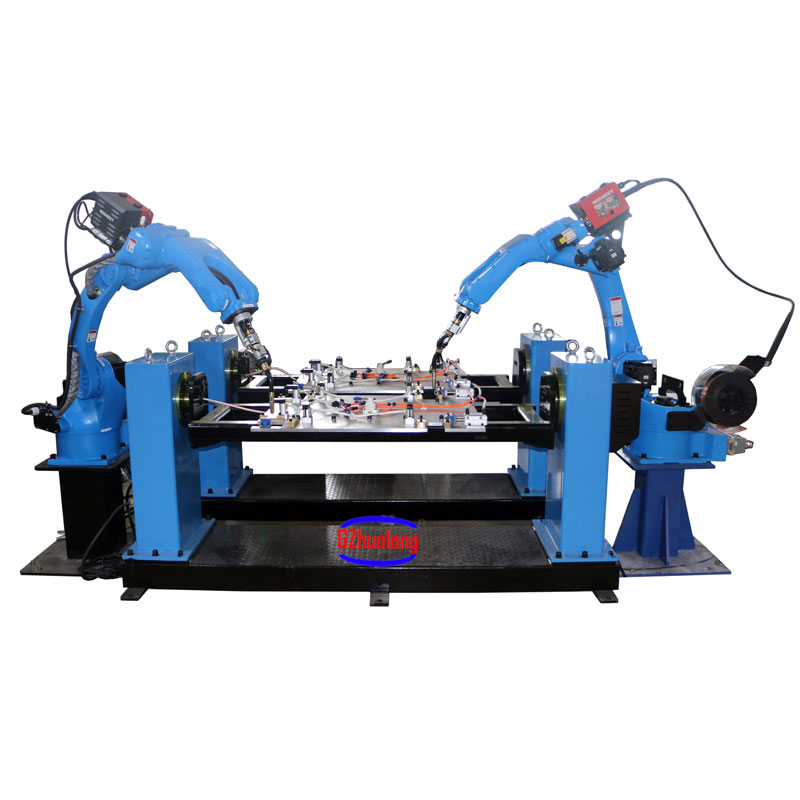
The robotic arm is capable of performing welding work
Welding is a complex and often dangerous process for humans, requiring high precision and endurance. However, modern technologies make it possible to automate this process using robotic manipulators. These "iron helpers" significantly improve production efficiency and weld quality, making work safer for people. Let's take a closer look at the capabilities of these smart machines.
Manufacturers of robotic welders
The robotics market is constantly evolving, offering a wide range of welding robotic arms, each with its own advantages and disadvantages. Major manufacturers such as KUKA, FANUC, ABB and Yaskawa offer solutions for a variety of applications - from spot welding of car bodies to complex argon welding of thin-walled structures. The choice of a specific manufacturer depends on the specifics of production, the required welding accuracy and the company’s budget. Many manufacturers offer not only the robots themselves, but also comprehensive solutions, including software for controlling and training robots, as well as service.
Benefits of using robotic welders
First, robotic arms significantly increase labor productivity. They work continuously, without rest breaks, ensuring high welding speed and consistent seam quality. Secondly, they provide high precision and repeatability of welding, which is especially important in the production of complex structures. The required accuracy is achieved through programmable motion trajectories and sensors that control the welding process. Thirdly, the use of robotic welders increases occupational safety by eliminating human contact with harmful factors such as sparks, welding gases and high voltage. As a result, the company receives a high-quality product, reduced production costs and improved working conditions for its employees.
Disadvantages and prospects
Of course, the introduction of robotics requires an initial investment. The cost of robotic arms and their integration into the production process can be significant. In addition, efficient operation requires qualified personnel capable of programming and maintaining robots. However, in the long term, these costs are offset by significant increases in productivity and improved product quality. In the future, we can expect even more advanced welding robots, capable of adapting to challenging environments and performing an even wider range of welding jobs, making their use even more profitable and widespread.