Robot welding
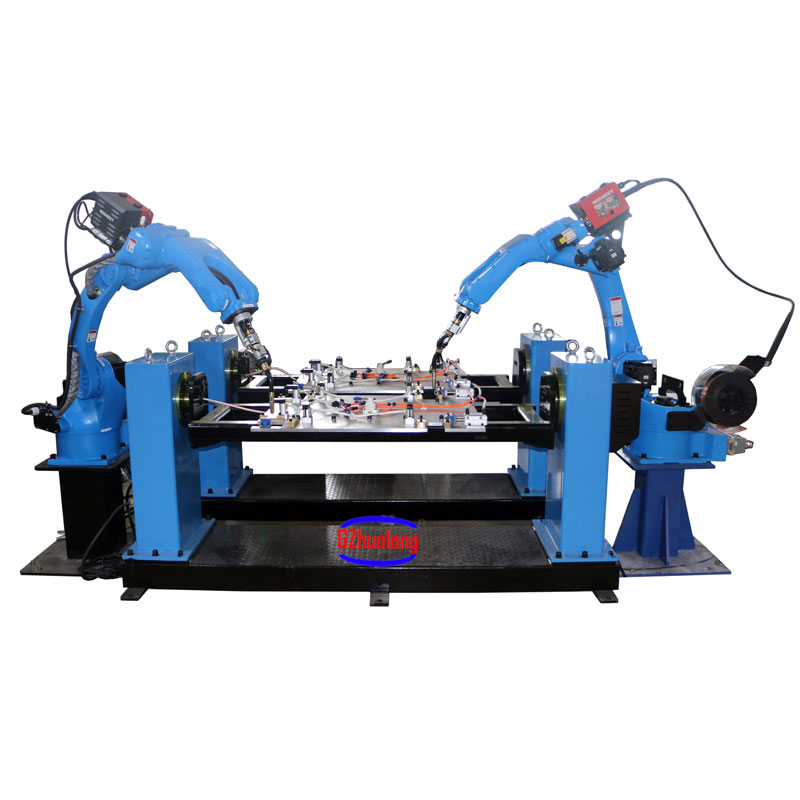
Automation of production has long gone beyond the realm of science fiction, and robots are confidently taking their place in industrial enterprises. Particularly impressive is the use of robots in welding, an area that has traditionally been considered labor-intensive and requires highly qualified welders. Robotic welding is not just replacing humans with machines, it is a quantum leap in productivity, accuracy and safety.
Advantages of robotic welding
High accuracy and repeatability are, perhaps, the main trump cards of robot welders. The human factor, which inevitably affects the quality of welds, is practically excluded here. The robot performs welding with a given program, ensuring ideal weld geometry and constant quality, regardless of the time of day or operator fatigue. This is especially important in mass production, where absolute identity of parts is required. In addition, robots are able to work with materials that are difficult for humans to weld, for example, in hard-to-reach places or when working with particularly toxic substances.
Increase productivity and reduce costs
Robot welders work around the clock, without breaks for rest or lunch. This significantly increases labor productivity. They are able to weld faster and more efficiently than a human, resulting in shorter production times and therefore lower costs. The amount of scrap is also reduced, which again saves resources and time for rework. Although the initial investment in robotic equipment is significant, in the long run robotic welding proves to be more profitable than manual welding.
Occupational safety
Robots take on dangerous and difficult work, thereby increasing workplace safety. They protect welders from harmful factors such as radiation, sparks and molten metal splashes. This is especially important when working with high voltages and toxic substances. Robotic welding is a contribution to creating a safer and more comfortable workplace for humans. Thus, the introduction of robots into welding processes is not just a modernization, but a strategically important decision to improve production efficiency and safety.