Production of welding robots
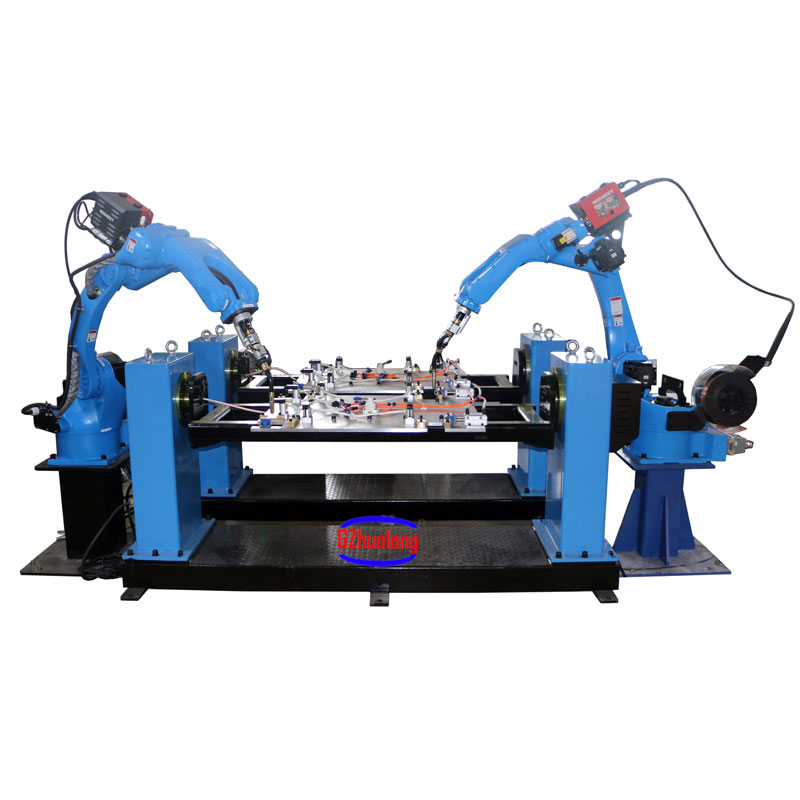
Welding robots are indispensable assistants in modern production, capable of performing complex and monotonous tasks with high accuracy and productivity. Their implementation allows companies to improve product quality, reduce costs and improve working conditions for welders. But how are these smart machines created? Let's take a look behind the scenes of the production of welding robots.
Components and Assembly
The production of a welding robot begins with the selection and careful quality control of individual components. These are high-precision servos that ensure smooth and precise movement of the manipulator, various sensors (visual, tactile) that allow the robot to “see?” and ?feel? welding zone, as well as powerful and reliable power sources for welding equipment. All these components undergo strict quality control before entering the assembly line. The assembly process itself is a complex and high-tech procedure that requires extreme care and precision. The specialists working on the assembly line are true professionals in their field who assemble the robot like a constructor, but with much greater responsibility and attention to detail.
Programming and Testing
After assembly, the robot needs training. Programmers develop and load special programs into the robot’s brain that determine the trajectory of the manipulator, welding process parameters (speed, current, voltage) and other important settings. This is a painstaking and creative process that requires in-depth knowledge of both robotics and welding technology. After programming, the testing phase begins. The robot goes through a series of tests that test its accuracy, performance and reliability. Only after successfully passing all tests the robot is considered ready for work.
Implementation and maintenance
The finished welding robot is sent to the customer, where it is integrated into the production process. For successful operation, it is important not only to correctly install and configure the robot, but also to train personnel in its operation and maintenance. Modern welding robots require regular maintenance, which includes checking the condition of components, lubricating mechanisms and replacing worn parts. Proper maintenance ensures a long robot life and prevents breakdowns. Thus, the production of welding robots is a complex, multi-stage process that requires high technology and qualified personnel, the result of which is highly productive and reliable assistants in modern enterprises.