Hydraulic Roll Forming Machine
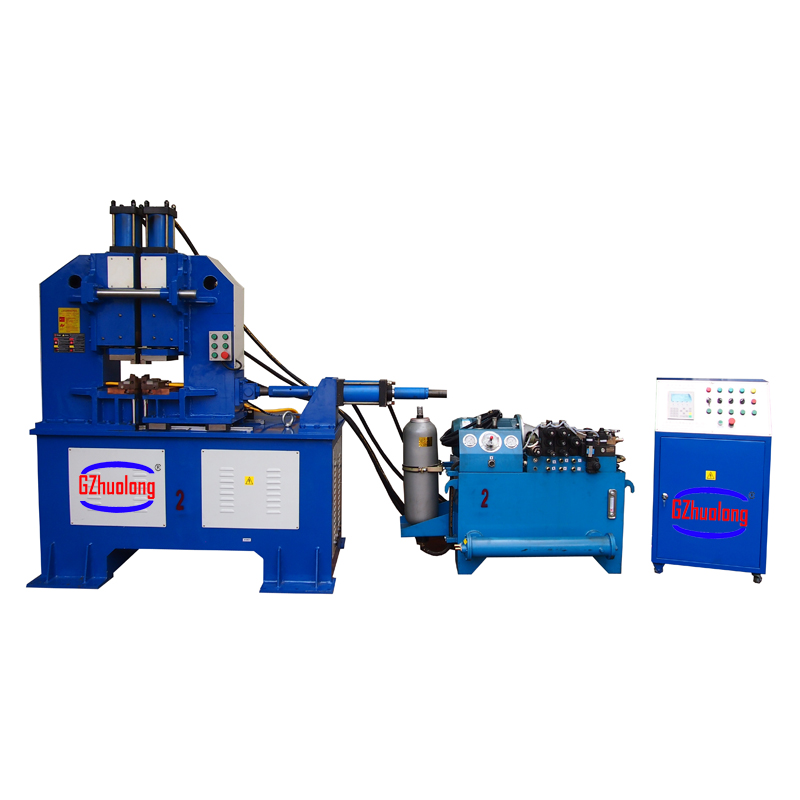
A hydraulic forming machine is a powerful and versatile tool that can produce a variety of curved sheet metal parts. Imagine: a flat sheet of steel, and after a few minutes it comes out with elegant curved elements for furniture, a car body or even a complex industrial structure. It sounds like magic, but it is actually the work of precision mechanics and hydraulics. Rolling is not just bending, it is a process of smooth and uniform bending of metal without the formation of folds and creases, which guarantees high quality and durability of the finished product.
Operating principle: three rollers and hydraulics
The heart of the machine is three rollers, rotating at a certain speed and at a given angle. A sheet of metal is passed between these rollers. The top roller, usually hydraulically driven, lowers and presses the sheet against the bottom rollers. The hydraulic system provides smooth and controlled force, allowing you to adjust the bend radius with high precision. It's like carefully folding a sheet of paper, but on an industrial scale and with metal. The power of hydraulics makes it possible to process thick and durable sheets of metal, which is unattainable with manual or mechanical methods.
Advantages of Hydraulic Roll Forming Machines
Compared to other methods, hydraulic rolling has a number of undeniable advantages. Firstly, it is high accuracy and repeatability of results. Thanks to the smooth hydraulic control, each bend will be almost identical to the previous one. Secondly, a wide range of processed materials and thicknesses. The machine can handle both thin sheet metal and thicker steel sheets. Thirdly, high performance. Automated processes and powerful hydraulics significantly speed up production, allowing large quantities of parts to be produced in a short period of time. Finally, hydraulic machines are relatively safe to operate as long as safety guidelines are followed.
Application in various industries
Hydraulic rolling machines are widely used in a wide variety of industries. From the automotive and shipbuilding industries, where they are used for the manufacture of complex body parts and upholstery, to the production of furniture, advertising structures and household appliances. Even in construction they find their application, for example, in the manufacture of metal structural elements. Regardless of the scope of application, a hydraulic rolling machine remains an indispensable assistant for creating high-quality and reliable metal products.